The insulation quote is a useful starting document
If an insulation contractor has flagged suspected knob and tube, share its proposal with the electrician before either trade assumes the electrical task is small. The relevant questions are whether the wiring is active, which circuits it supplies and what must be completed before the proposed insulation covers the area. An attic photograph cannot establish those answers on its own.
Watt Cleveland Knob and Tube offers and manages older-home electrical work in Cleveland and nearby communities. Electrical work is performed by fully licensed and insured contractors.
Watt Cleveland Knob and Tube offers and manages older-home wiring work across Cleveland and nearby communities, fulfilled by fully licensed and insured contractors. For an insulation-related request, the coverage area and construction sequence belong in the first conversation. A clear starting document helps the assessment focus on the space that is about to become harder to access.
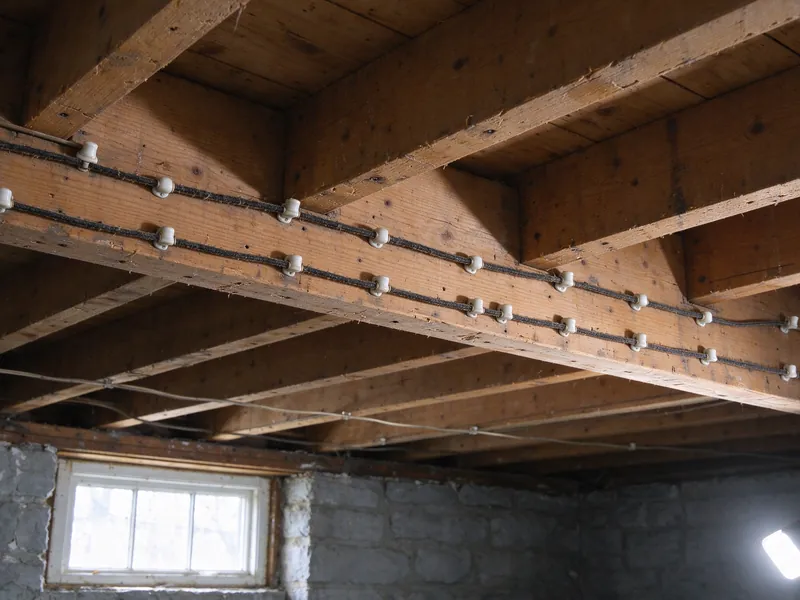
Visible attic wiring may continue beyond the attic
A run across exposed framing can supply a ceiling fixture below or connect with wiring beyond the accessible space. Replacing only the portion visible in a photograph may leave an unresolved connection elsewhere. Ask the assessment to explain the affected circuit boundary instead of describing the job as clearing the attic without further definition.
Active and abandoned material also need to be distinguished. Porcelain supports can remain after a previous rewire, while other conductors in the same space can still supply power. New cable nearby does not prove the old system was completely retired. Professional verification is needed; do not move conductors or insulation to investigate.
Where finished attic rooms, low access or enclosed ceilings prevent a complete answer, keep that limitation in the findings. The owner and the next trade should understand what has been established and what further investigation would involve. A missing answer is easier to plan around when it is stated before work is covered.
Ask for an electrical endpoint the next trade can understand
A useful proposal identifies the circuits to be replaced, how old wiring will be treated and any required work beyond the attic. It should distinguish accessible physical removal from electrical retirement. Removing every disconnected porcelain support can be a different task from replacing the active system, especially where material extends into finished cavities.
The electrical contractor also needs to consider new routes, devices and applicable protection for the agreed work. Panel or service changes should be explained separately when needed. A new distribution panel is not itself evidence that the attic branch wiring has been replaced.
Discuss the expected completion records before authorizing the job. The insulation contractor may need a defined readiness handoff, while the owner or insurer may need a fuller description of the electrical scope. Ask what documents will be available and which organization is responsible for accepting each one. Do not assume a general invoice answers every request.
Leave room for inspections and access outside the work area
Required permits and inspections need to fit the installation sequence. The authority for the property determines the applicable process; a practice described for another municipality or state does not automatically apply. The electrical work should reach the required approval stage before another trade conceals it.
If the attic assessment identifies a connection in a finished room below, discuss the access and restoration before setting the insulation date. A ceiling opening, plaster repair and repainting can introduce tasks absent from the original insulation proposal. Identify who performs them and when the room can return to use.
Occupied homes need an interruption discussion too. Explain heating, refrigeration, home-office or other power needs that could affect the work plan. The contractor can discuss the expected sequence after the scope is understood. Daily power restoration and a fixed duration should not be assumed from the fact that the visible wiring is in the attic.
What to have ready for the estimate
Provide the property location, insulation proposal and any existing electrical report. Describe the accessible attic area and known finished spaces without entering unsafe locations or disturbing material. Records of earlier rewiring can help when they identify circuits rather than only listing a panel upgrade.
Ask the proposal to separate the electrical installation, access work, required approvals, removal and finishing responsibilities. An attic-only project needs its own scope; a whole-house budgeting example cannot be divided into an attic price. If the findings support broader work, the reason should be explained rather than hidden inside a revised total.
Before the insulation trade returns, confirm the agreed electrical handoff and any outstanding items. Keep the completion information with the original proposal so a future owner or contractor can understand what changed. The useful result is not simply an attic that looks tidier. It is a documented electrical scope and a construction sequence that avoids covering an unanswered question.
Questions about this decision
Should I pull insulation away from the conductors for a photo?
No. Do not disturb wiring or insulation to prepare evidence. Provide what is visible from normal safe access and let the contractor evaluate what additional access is appropriate.
Can a disconnected support remain in the attic?
Its treatment depends on the agreed removal scope and applicable requirements. The important first distinction is whether associated conductors remain active. Do not decide that from appearance.
Does the insulation contractor decide the electrical scope?
The insulation proposal identifies the planned coverage and its prerequisites. A qualified electrical contractor assesses the wiring, and the applicable authority determines required approvals. The trades need an agreed handoff.