Signs you can notice without opening anything
The clearest signs a house needs rewiring show up in daily use: a cover plate that feels warm or looks discolored, a burning smell, buzzing at a switch, lights that flicker on one circuit, repeated fuse or breaker trips, two-prong outlets throughout and constant extension-cord use. Some call for immediate action; others call for planning.
Watt Cleveland Knob and Tube offers and manages older-home electrical work in Cleveland and nearby communities. Electrical work is performed by fully licensed and insured contractors.
None of these signs requires removing a cover, opening a box or touching a wire to notice, and none should lead you to. They are reasons to have the wiring assessed. A single sign rarely proves a single cause, and a house without any of them can still contain deteriorated or altered wiring behind the plaster. What the signs do is tell you how soon to act and what to describe to the electrician.
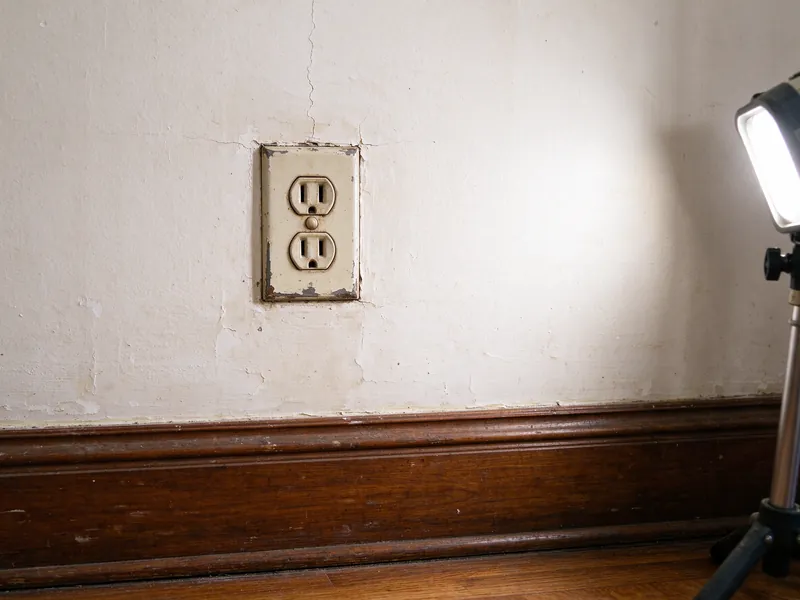
Heat, odor and sound: the urgent group
A switch or outlet plate that is noticeably warm, a plate or nearby paint that has turned brown, a smell of hot plastic or scorching, and a crackling or buzzing sound from a device all point toward the same mechanism. A loose or deteriorated connection adds resistance, and resistance at a connection turns current into heat in a very small space. Old rubber and cloth insulation near that heat can become more brittle, which can make the next problem more likely.
Treat these as stop signs. Stop using the affected outlet, switch or circuit and call an electrician. If you see smoke, flame, sparking or arcing, leave the area and call emergency services. Do not take the cover off to look, and do not keep testing the device to see whether the smell returns.
One caution against over-reading: some dimmer switches run slightly warm by design. A dimmer that is mildly warm with no odor, noise or discoloration is different from a plate that is hot, marked or smells. If you are unsure which you have, describe it to the electrician rather than deciding yourself.
Flickering and trips that follow a pattern
Lights that flicker or dim when a heavy load starts, such as a space heater, microwave or vacuum, usually mean that load shares a circuit with the lights. On its own that can simply reflect too few circuits for modern use. Flicker that happens at random, that is confined to one room or that comes with a buzzing sound is more likely to involve a connection problem and moves toward the urgent group.
Repeated fuse failures or breaker trips are the protective device doing its job. The common mistake is treating the device as the problem. Replacing a blown fuse with a larger one, or resetting a breaker again and again, removes the warning without addressing why the circuit is overloaded or faulting. Note when trips happen, what was running and which rooms lose power. That pattern helps the electrician separate an overloaded circuit from a damaged one, which lead to different scopes of work.
Two-prong outlets and the extension-cord house
Two-slot outlets in most rooms are one of the most common planning signals. Original knob and tube has no equipment grounding conductor, so a house wired that way often has two-prong outlets throughout. Two-prong outlets are not proof of knob and tube, since later ungrounded wiring methods produce the same outlet, and three-prong outlets are not proof of grounding, since they are sometimes installed on ungrounded circuits.
A related signal is how the household gets power where it is needed. Power strips plugged into adapters, extension cords running under rugs or between rooms and appliances that only work from one outlet all suggest the wiring was laid out for far less load than the house now carries. That is a capacity and layout problem rather than an emergency, but cords pinched under furniture or run under rugs can be damaged and overheat, so reduce reliance on them while planning the work.
What you can see in basements and attics
Unfinished basements and attics are where many owners first see old wiring, and looking is fine. Porcelain knobs fastened to joists, porcelain tubes through framing and individual cloth-covered conductors running separately are typical of knob and tube. Old porcelain lampholders on basement ceilings, with cloth-covered wires leading to them, are another common sight.
Look only. Cloth or rubber insulation that appears cracked, frayed or crumbling where it meets a fixture or passes a support is a reason for assessment, but handling it can break insulation that is still doing its job. Do not pull on conductors, move insulation to see what is underneath or crawl into tight attic areas to get a better view. Photographs taken from a safe position are useful. If wiring is buried under attic insulation, mention it; that combination needs professional evaluation before any insulation work proceeds.
Fuses, mixed eras and newer panels
A fuse panel, or a newer breaker panel with a small number of circuits, is another planning signal. Fuses themselves are not a defect, but a fuse box often indicates that the branch wiring is also of an older generation. The reverse inference is the one to avoid: a modern breaker panel does not show that the branch circuits were rewired. Many older houses received a new panel and service while the original wiring stayed in the walls.
Signs of mixed eras also matter. A kitchen or bath with new devices next to rooms with old two-prong outlets may mean a partial update, and the place where new cable meets old conductors is a common location for later problems. Note which rooms appear updated and which do not.
Paper signals: insurer, inspector and sale notes
Some of the most decisive signs arrive in writing. An insurer may ask about knob and tube, request documentation or set conditions on a policy. A home inspector may note suspected knob and tube, ungrounded outlets, cloth wiring or amateur splices, usually with a recommendation for evaluation by an electrician. In several suburbs a point-of-sale inspection can raise electrical items before a property changes hands.
These notes describe what someone saw within a limited scope. They do not establish how much of the wiring is active, how far it extends or what work will satisfy the party who raised it. Keep the exact wording and give it to the electrician, because the recommended scope should answer the specific request rather than a general impression that the house is old.
Sorting urgent from planning, and what to do next
Urgent signs share heat, smell, sound, visible damage or shocks. For those, stop using the circuit and call; for smoke, fire or arcing, leave and call emergency services. Planning signs share age, layout and capacity: two-prong outlets, cords and adapters, fuses, visible porcelain in the basement, a short circuit count and written notes from an insurer or inspector. They justify a scheduled assessment rather than an emergency call.
An assessment should identify which circuits remain on legacy wiring, which are active, what condition the accessible portions are in and what access a replacement would need. Watt Cleveland Knob and Tube offers and manages knob and tube inspection and replacement through fully licensed and insured contractors. When you request one, list the signs you noticed, where and when they happen and any reports you have, so the visit starts from what the house is actually doing.
Questions about this decision
Is a warm switch plate ever normal?
Some dimmers run slightly warm by design. A plate that is hot, discolored, buzzing or smells of scorching is not normal. Stop using that switch or circuit and call an electrician rather than removing the plate to look.
Do two-prong outlets mean the house has knob and tube?
Not by themselves. Knob and tube usually produces two-prong outlets, but so do some later ungrounded wiring methods. They are a reason to have the wiring identified, not a diagnosis.
How many breaker trips are too many?
There is no safe number to aim for. Repeated trips on the same circuit mean it is overloaded or faulting. Note the pattern, avoid resetting it over and over and have the circuit assessed.
Should I wait for a problem before having old wiring assessed?
Planning signals such as two-prong outlets, fuses, visible porcelain or an insurer question justify a scheduled assessment before anything goes wrong. Waiting for heat or odor means acting under pressure rather than on your own timetable.