The answer depends on actual conditions
Knob and tube can present electrical hazards, especially where insulation has deteriorated, connections have been altered improperly or building changes affect the installation. The system name alone does not establish the condition of every circuit. A qualified electrician should assess the accessible wiring and relevant connections rather than declare it safe or dangerous from a photograph.
Watt Cleveland Knob and Tube offers and manages older-home electrical work in Cleveland and nearby communities. Electrical work is performed by fully licensed and insured contractors.
The absence of obvious symptoms does not resolve concealed questions. A light can work while the circuit has a defect, and intact porcelain does not prove intact conductor insulation elsewhere. The useful outcome is a description of observed conditions, their implications and the work needed to address them.
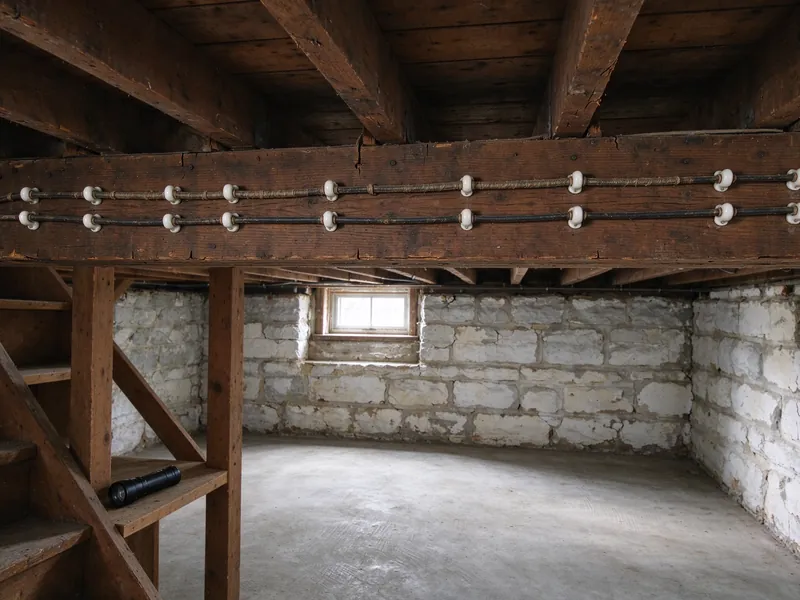
Age matters through materials and changes
Old conductor insulation may become brittle or damaged, particularly where it has been disturbed. Connections at devices, alterations and exposed runs can deserve closer attention than an undisturbed support viewed from a distance. The electrician needs to understand the installation as a circuit, including relevant protection and the loads it supplies.
Porcelain is only one component. Its apparently sound condition cannot establish the condition of a wire farther into a wall or at a ceiling fixture. Conversely, dusty or aged-looking material should not be assigned a specific defect without evidence. An assessment should make that distinction clear. Describe observed damage and access limits rather than treating the home's construction era as a substitute for investigation.
Later work can change the original arrangement
A circuit may have been extended to serve additional outlets or connected to newer wiring during a renovation. The quality and suitability of those alterations matter. A short modern cable run can hide a transition to older wiring outside the opened room, so an updated finish does not necessarily settle the electrical question.
Changed use is relevant too. A room that once served a limited purpose may now contain appliances or equipment with different electrical needs. New dedicated circuits may be appropriate for particular loads while separate legacy questions remain elsewhere. Avoid assuming that replacing a panel, installing a protective device or reducing the number of appliances is a complete solution for every condition. The recommendation should follow the assessed circuit and intended use.
Understand the mechanism behind an observed defect
A loose connection can create resistance and localized heating. A deteriorated or damaged conductor covering can leave insulation protection compromised. Improper splices and later alterations can introduce conditions in which arcing becomes a concern. The relevant recommendation follows the actual finding, rather than a universal claim that every original support or wire is already failing.
Circuit demand and protection matter as well. Overloading can create overheating concerns, while changing protective equipment without evaluating the conductors does not establish a suitable circuit. The purpose of the assessment is to understand the installation and the changes it has undergone. A device that continues to operate is not proof that every connection is in good condition, and a single visible defect does not describe the extent of all wiring in the building.
Leave investigation to a qualified electrician. Do not tighten, unwrap or move an old connection to see whether it is loose. Report what was noticed from safe access and explain any symptoms. The professional assessment should connect the observation to an appropriately bounded repair or replacement recommendation.
Where an insulating covering has broken away, underlying conductive material may be exposed. Report that observation from a safe position without touching or moving it. The electrician needs to establish the condition, electrical status and affected extent; an exposed spot should not be treated as an invitation to tape or repair old wiring yourself.
Grounding and protection are separate concerns
Original K&T lacks an equipment grounding conductor. A receptacle with three slots does not establish that an appropriate grounding path exists behind it. That is one reason an outlet's appearance should not be used to certify the condition of an older room.
GFCI protection, AFCI protection and equipment grounding have different functions. None should be described as repairing deteriorated insulation or confirming that concealed wiring has been replaced. A contractor may recommend particular protective measures as part of an assessed scope, but the explanation should identify what each measure addresses and what remains unresolved. This guide is not an installation method or permission to adapt an ungrounded circuit for every appliance.
Insulation and access can bring the decision forward
Building insulation around active K&T is an important concern because the wiring was arranged as an open-air system. An attic insulation proposal should therefore be coordinated with electrical assessment before the work proceeds. Filling an area first can also make subsequent investigation and routing harder.
Tell the electrician about insulation already present and the planned work area. Do not disturb conductors or move insulation to investigate. Establish active status, the required electrical scope and the milestone the next trade depends on. A rule or certification arrangement mentioned in another state should not be treated as approval for an Ohio property. The authority and project requirements need to be considered for the actual address and proposed work.
Distinguish a planned assessment from immediate danger
A report identifying suspected old wiring can usually be discussed as an assessment and scope question. Smoke, fire, visible arcing or an immediate danger requires a different response. Leave the affected area and contact emergency services rather than waiting for an estimate or attempting to locate a fault yourself.
For a non-emergency finding, gather the report, any existing electrical records and the reason the issue needs attention. Explain whether it concerns insurance, a purchase, renovation or continued use. Watt Cleveland Knob and Tube offers and manages older-home electrical work through fully licensed and insured contractors. The assessment can distinguish conditions requiring correction from questions needing more access, and help define partial or complete replacement without pretending that one broad warning describes every house.
Repeated breaker trips, shocks or unusual heat should be described to a qualified electrician rather than treated as a reason to increase protective-device ratings. Do not reset equipment repeatedly to experiment with the problem. The report should preserve when and where the symptom occurred, while the electrician determines its cause and the appropriate response.
Questions about this decision
Does working lighting mean the circuit is safe?
No. Operation does not establish the condition of insulation, connections, protection or concealed sections. A working circuit can still need assessment and corrective work.
Is every K&T finding an emergency?
No. The name of the wiring method alone does not establish immediate danger. Smoke, fire, visible arcing or another immediate threat requires emergency assistance rather than a routine estimate request.
Will adding a new breaker fix the old wiring?
A protective-device change does not replace conductors or repair every hidden connection. The contractor needs to assess the circuit and explain why each proposed change addresses the actual finding.