Start with the authority for the address
Cleveland requires electrical permits for electrical work and identifies contractor licensing, insurance, bonding and city-registration requirements. A property in a nearby municipality follows that municipality's administration. The permit and inspection plan must match the actual work, rather than a general assumption that all older-home projects use one regional process.
Watt Cleveland Knob and Tube offers and manages older-home electrical work in Cleveland and nearby communities. Electrical work is performed by fully licensed and insured contractors.
A full K&T replacement, a defined branch-circuit project and a service-equipment change can involve different details. Give the contractor the property address and proposed scope. The authority responsible for the property can resolve project-specific questions about applications, plan review and inspection stages.
Code compliance concerns the requirements applicable to the actual installation and proposed alterations. An old system's presence does not by itself establish that every part of the house must be brought into a single new-work scope. Ask the responsible contractor and authority how the permitted replacement, retained wiring and associated equipment are treated. A limited inspection should not be presented as certification of every concealed circuit.
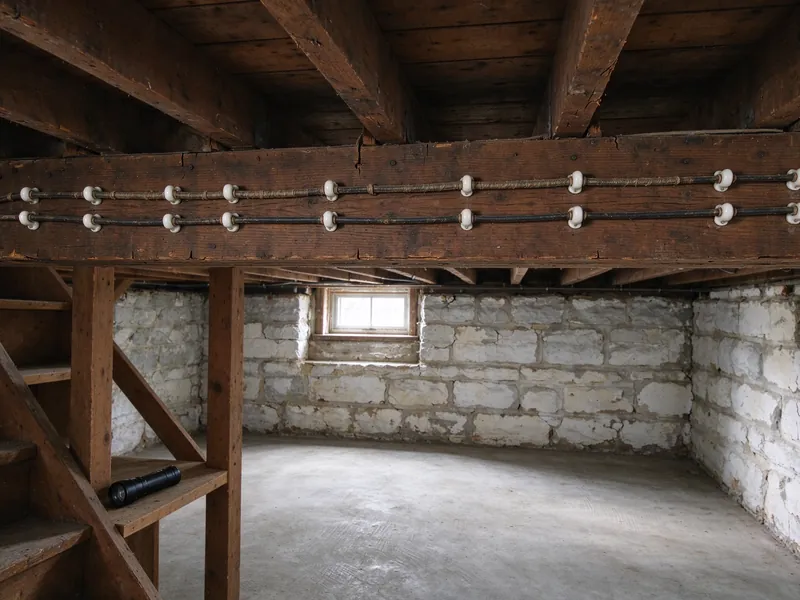
The permit describes work, not the whole history of a house
A permit is associated with a defined application and scope. It should not be read as proof that every concealed circuit in an older house was investigated or replaced. A previous permit for a panel change may describe equipment work without establishing that legacy wiring in the rooms was removed.
When reviewing old records, compare their descriptions with the condition now being assessed. Separate an application, an inspection result and a closed permit. A record of proposed work is not the same as proof of completed installation. If a purchase depends on an earlier claimed rewire, ask for records that explain the branch circuits involved rather than relying on a permit title alone.
Electrical inspections and purchase inspections have different purposes
A buyer's home inspection can identify visible legacy wiring and recommend further evaluation. That report is different from municipal inspection of permitted electrical work. An insurer may request yet another form of assessment or completion evidence. Each process answers a different question and has its own scope.
Do not assume that passing one review clears every other requirement. A permit inspection should not be represented as guaranteed underwriting acceptance, and a home-inspection report may not establish every circuit's active status. Put the relevant reports and written requests together before setting the electrical scope so the contractor understands which findings need to be addressed.
Coordinate inspection stages before surfaces close
Inspection timing affects other trades. Where work needs inspection before concealment, the electrician, builder and finish contractor must agree on the handoff. Closing a wall or covering an attic too soon can create avoidable disruption. The required sequence should be confirmed for the project, not improvised when the next trade arrives.
Lakewood's published contractor guidance specifically separates electrical permits and identifies rough-in inspection before concealment plus a final inspection to close the permit. That is a useful example of why the municipality matters. For a different address, confirm the applicable process instead of treating Lakewood's administrative details as a rule for all of northeast Ohio.
During a renovation, align the electrical modernization scope with the rooms being opened and the circuits that continue beyond them. The renovation drawing does not prove that the electrical work ends at the same wall. Resolve the affected routes and required inspection access before the builder schedules closure, then identify the milestone that releases the area for insulation or finish work.
Service changes may add another dependency
A branch-circuit replacement does not automatically require a larger electrical service. If the assessment does identify service or meter-related work, utility coordination may become part of the schedule. The proposal should explain the equipment change, expected interruptions and responsibilities for arranging the relevant approvals.
Ask which tasks can proceed independently and which depend on a utility or municipal appointment. A contractor's installation schedule and another organization's availability are not the same promise. This distinction is particularly important when the owner is planning around a move, renovation handoff or insurer deadline. Obtain a realistic sequence rather than assuming all approvals occur on the final day.
Settle responsibility in the written scope
The proposal should identify who obtains required permits, supplies application information and coordinates inspections. Owners should also know what access inspectors may need and which records will be provided at completion. That clarity is useful even when permit costs are included in a single contract total.
Ask whether the person or company performing the electrical work meets the applicable local requirements. Watt manages the work through fully licensed and insured contractors; that fulfillment model is not a claim that a brand name itself is a trade license. Requirements must be satisfied by the party responsible for the installation at the property. Verify the actual contractor and current registration through the relevant authority where appropriate.
Keep a record that a future owner can understand
Retain the written electrical scope, permit identifiers and available inspection results alongside the contractor's completion description. If the job was partial, include what remained outside it. If a change expanded the original scope, retain the approved revision so the paperwork follows the work actually performed.
For a sale, clarify any separate property-transfer requirement with the municipality or transaction professionals. Cleveland Heights and Shaker Heights administer different sale-related processes, and those should not be generalized to every surrounding city. A record packet that distinguishes the electrical project from the property's broader transaction is easier for the next owner, electrician or insurer to interpret accurately.
Questions about this decision
Does a previous panel permit prove the house was rewired?
No. Read the scope and supporting completion records. Equipment replacement and branch-circuit replacement are different work, and a permit for one does not establish the other.
Can the finish contractor close the wall once wiring is installed?
The project must satisfy any required inspection before concealment. Confirm the handoff with the electrical contractor and authority before scheduling closure, rather than assuming installation alone releases the area.
Does the city decide whether my insurer accepts K&T?
Municipal approval and insurance underwriting are separate decisions. Get the carrier’s requirements directly and ask what electrical records it needs. A permit does not guarantee insurance acceptance.